SKIP TO CONTENT


Iowa Primary Results and Analysis
At 50 to 1, we work with the best consultants in the country.
Here is an update on the Iowa primary results from Logan Shine of Shine Strategies:
Now that Iowa’s June 2 primaries are settled, here’s my read on the field heading into the November 3 general election.
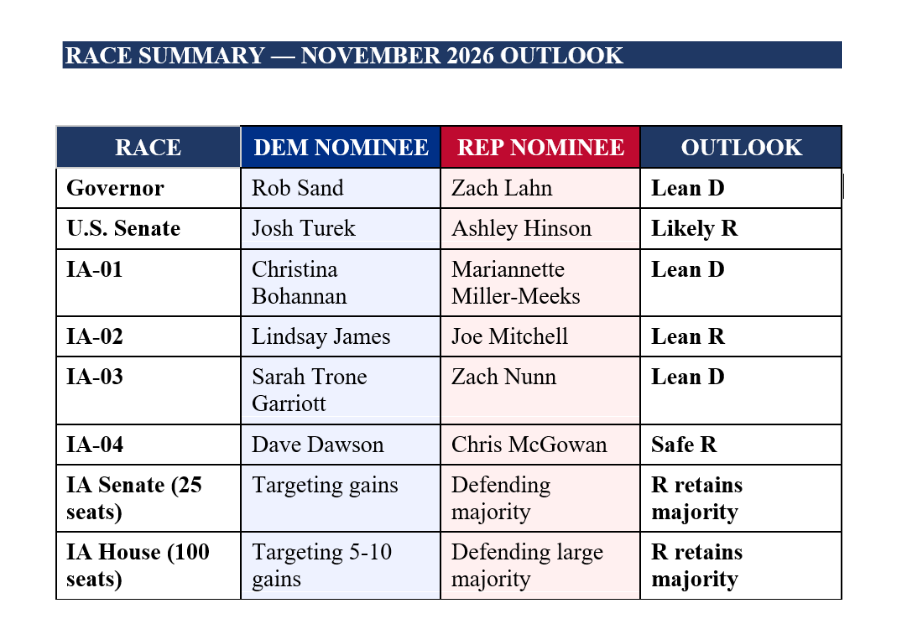
Late in the evening last night, all eyes were on the Republican gubernatorial primary and it delivered the night’s biggest shock. Trump-endorsed Rep. Randy Feenstra conceded, making political outsider Zach Lahn the Republican nominee. It’s the first Trump-backed loss of the 2026 cycle in a primary for governor, House, or Senate.
Lahn is a farmer, businessman, and political outsider from Belle Plaine. He built his campaign around an “Iowa First” message, supporting family farms, improving education, addressing the state’s high cancer rates, and creating opportunities to keep young people in Iowa. He positions himself as MAHA-aligned, anti-establishment, and independent of traditional political donors, leaning on his background outside career politics. He’ll face Democrat Rob Sand, the only Democrat currently holding statewide office.
My read is this leans Democrat: Sand is a proven, well-funded statewide winner and disciplined campaigner, while Lahn is untested statewide and exits a bruising, expensive five-way primary that split the party.
The open Senate matchup is also set, with Republican Ashley Hinson and Democrat Josh Turek each winning their primaries easily. I’d put this race as likely Republican.
As attention turns to the general, the structural backdrop favors the GOP. The most recent 2026 voter registration data show roughly 748,000 registered Republicans to about 562,000 Democrats, an edge of around 186,000 statewide. Just as notable, about 732,000 voters are registered with no party affiliation, making independents nearly as numerous as Republicans and likely decisive in the closer contests. Iowa remains competitive in certain races, but the registration math is a clear advantage for Republicans.
That advantage matters most on the competitive House map, where national spending will concentrate. IA-01 is a Bohannan–Miller-Meeks rematch of a sub-800-vote 2024 race and leans Democratic; IA-03 (Trone Garriott vs. incumbent Nunn) is another top Democratic target. IA-02 (Mitchell vs. James) leans Republican, and IA-04 stays safely red.
Bottom line: the governor’s race is the marquee contest and the most volatile, and Lahn’s win is a signal worth watching about where the GOP base is moving, but with a Republican registration edge and an independent-heavy electorate, candidate quality and turnout will decide the close races.